
Social media client onboarding: a checklist for agencies
Onboarding a social media client is two weeks of collecting, deciding and agreeing before any content is made. Collect the access and the brand files, write down the strategy and the voice, agree the approval process and the deadline in writing, then plan the first month. Most first-month problems come from something skipped here.
Week one: collect
Access
- Admin or editor access to every channel you will run
- Access to the ad accounts, if paid social is in scope
- The website or store, and who can change it
- Any scheduling or analytics tools already in use
Ask for access to be granted to an agency account, not shared passwords. When the contract ends, removing access should not mean resetting the client's passwords.
Brand files
- The logo in every version, including on dark backgrounds
- The colours as hex codes, and the fonts
- Product photographs, or the store they can be taken from
- Past posts the client liked, and past posts they did not
- Anything that must never appear: words, competitors, topics
The business
- What sells, and what they want to sell more of
- The customers, in the client's own words
- Prices, offers and the dates of the year that matter to them
- The questions customers ask most
Week two: decide and agree
Write the strategy down
One page is enough: who the brand is for, what makes it different, the content pillars and their shares, and the channels. If you cannot write it on one page, you do not have it yet. Our content pillars guide covers that part.
Write the voice down
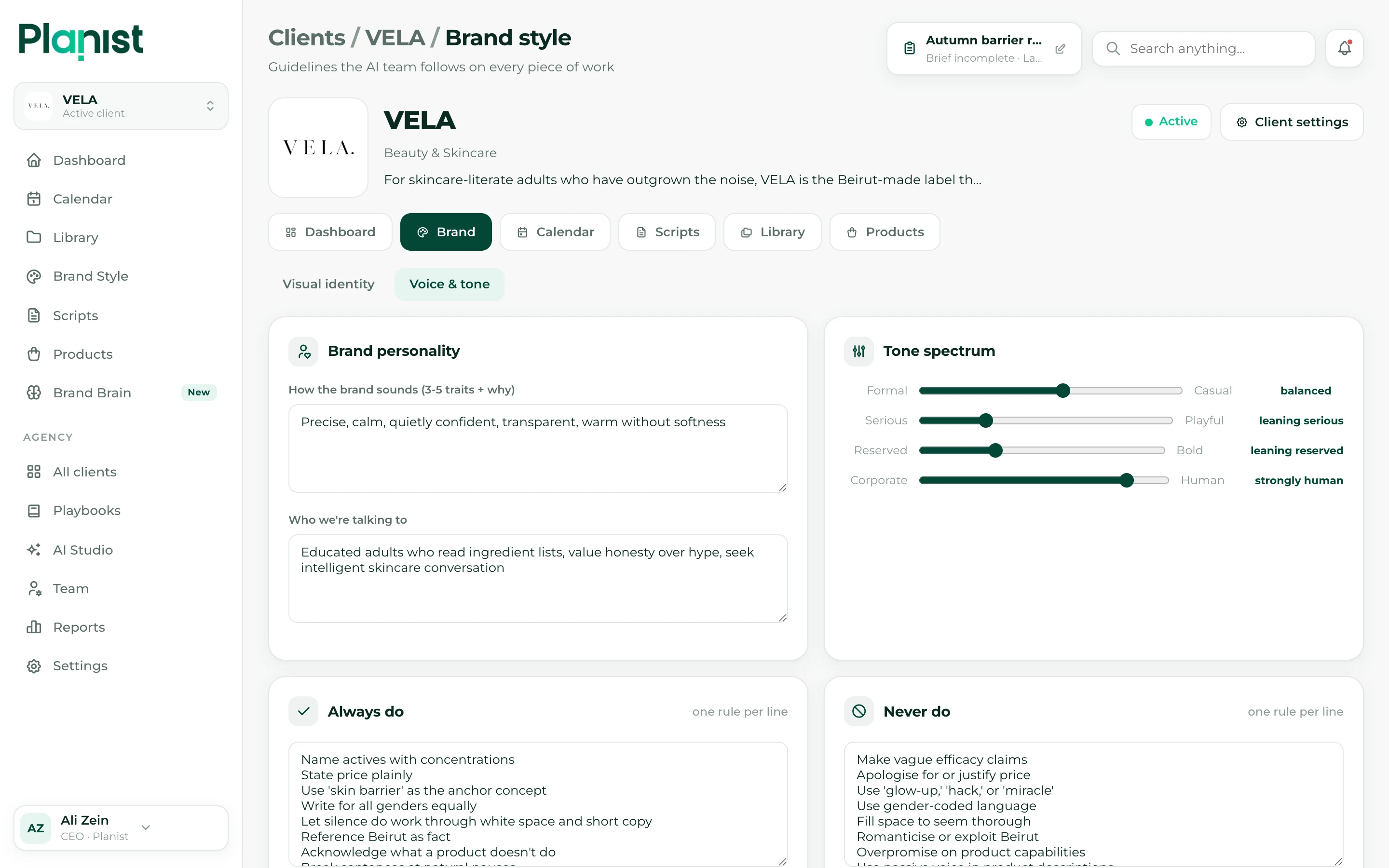
Five to eight words that describe how the brand sounds, plus a short list of words it never uses. Every caption is checked against them.
Agree how approval works
- Who approves. One person, named. Two approvers who disagree will stall every month.
- How. The link they will receive and where, usually WhatsApp. See how to get posts approved on WhatsApp.
- When. The deadline each month, and what happens if it is missed.
- How many rounds of changes are included.
Put all four in the contract or the kickoff email. It saves an argument in month three.
Agree what you will report
Pick three numbers that match what the client actually wants. Enquiries, store visits or bookings beat follower counts for most businesses. Agree them now, so the first report is not a surprise.
Then plan the first month
Plan the whole month before producing any of it, and get the plan approved before the designs are made. Changing a calendar slot costs a minute. Changing a finished design costs an hour.
Expect the first month to have the most notes. Each note teaches you something about the brand, so write every one down as a rule and apply it to the posts after it. The second month should need fewer changes than the first, and if it does not, the notes are not being kept.
Planist does much of week one itself. It reads the brand from its website or store and writes the voice, the palette, the type and a first strategy into the brand's brand brain, which grows from every note the client leaves after that.
The checklist
- Channel access granted to the agency account
- Ad account access, if in scope
- Logo, colours, fonts and product photographs collected
- Liked and disliked past posts collected
- Words and topics to avoid listed
- One-page strategy written and agreed
- Voice written down in five to eight words
- One named approver
- Approval link, deadline and change rounds agreed in writing
- Three reporting numbers agreed
- First month's plan approved before production
Questions people ask
- How long should social media client onboarding take?
- About two weeks: one to collect access and brand files, one to agree the strategy, the voice and the approval process. Then the first month is planned.
- What should be in a social media onboarding questionnaire?
- The business goals, the customers, what sells, the dates of the year that matter, the competitors, the words and topics to avoid, and examples of posts the client likes and dislikes.
- Who should approve content on the client's side?
- One named person. Two or more approvers who are not aligned is the most common reason content goes out late.