
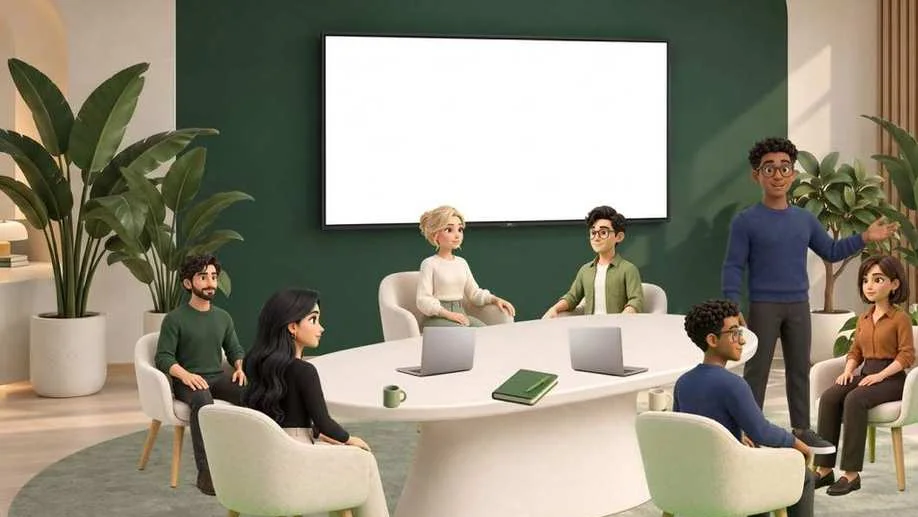
Your agency has a weekly meeting. Now your brand has one too.
Once a week the six agents that ran the brand sit down and report. Each one takes the board, says what it did and what it is waiting on, and answers the question you ask it. You approve a step in the room and the work starts.
 The week in what we made
Agent spend for all of it: about $20.
How the month dividesFour pillars, written at onboarding, before a single post.
A caption from this weekStep three is the one people skip.
Not intentionally. It just gets moved — applied too early, layered over the wrong thing, or saved for mornings when there's more time.
Facebook Feed 1:1 · The Six-Step Ritual
This week's visuals, and their scores


The pass mark is 7. Anything under it went back and was made again.
October, slot by slot27 slots, 4 a week, across Instagram, TikTok and Facebook.
Where the client got toOpened on WhatsApp. No account, no PDF, no login.
 Performance Analyst
Here is the week. I am not going to tell you how it performed, because no channel is connected yet. I can tell you what we made, what passed, and what it cost.
No reach, no engagement, no follower count. Those numbers do not exist yet, so the Analyst says so instead of filling the board.
 Creative Strategist
The month splits four ways. The barrier takes the largest share because it is the thing this brand is actually about.
Read from the strategy written at onboarding. The brand's own strategy outranks the industry playbook.
 Copywriter
Every caption is held against seven tone words before you see it. Precise and calm, transparent, unhurried. No glow-up, no hack, no miracle.
Quoted as the product wrote it, punctuation included.
 Designer
Four this week. Each carries the score the brand check gave it, and anything under the pass mark went back and was made again.
The product in each one is the photograph read off the store, not a stand-in.
 Content Planner
October is planned end to end. Four posts a week across three channels, and every slot carries the reasoning that put it there.
The same calendar you can edit a slot on, or send to the client in one press.
 Account Coordinator
The client has been through October on the review link. Three approved so far, ten notes left, and one of those notes is already a rule the designer follows.
They opened a link on WhatsApp. No account, no PDF, no login.
One room, six agents. Click a face to hand them the board.
Shown with VELA, the demonstration brand this site uses throughout. Every figure on the board is its real output.
Four things you can do while it runs.
It is a meeting, not a video. Nothing is locked behind watching it to the end.
- Click anyone
The room moves to them and the board changes to their week.
- Ask a question
That person answers in their own voice, in writing or read aloud.
- Approve a step
The work starts: ideas and copy drafted, visuals rendered, posts scheduled.
- Skip to the summary
The whole week on one page, in the time it takes to read it.
An approved step is not a note.
Approve something in the room and it is queued as work, not written down as an intention. Next week's meeting opens with what you approved and what became of it.
- Drafted
The copy or the ideas exist and are waiting for you.
- Rendered
The visuals were produced and went through the brand check.
- Scheduled
The post is on the calendar, on its date, on its channel.
- Failed
It did not work, and the room says so out loud.
Failed is on that list on purpose. A meeting that only reports its wins is a meeting you stop trusting.
What it will not do.
The room is only useful if it is honest about the parts that are not there yet.
No social channel is connected to Planist yet. The Analyst opens by saying so, rather than filling the board with numbers nobody measured.
Per brand, per week. A curious afternoon cannot run up the bill.
Speech is read by the machine you are on. It works everywhere, and it is not a voice actor.
Prepared in the background so the room opens at once, and rewritten when the facts behind it move.
It is an illustration, not a render farm.
Worth saying plainly, because a 3D meeting room is the kind of thing that usually means a long load and a hot laptop. This is neither.
- 01Pre-rendered illustration, composited in the browser
One picture of the empty room, one cut-out per person per pose, and the movement in CSS. There is no 3D engine and no video, so it opens at once and looks the same on every machine.
- 02The board is live HTML over the wall
Which is why the text on it stays sharp at any size, and why it can hold the real work instead of a picture of it.
- 03The deck is the client's, the room is ours
The board takes their logo, their palette and their typeface from the brand style already on file. The furniture stays Planist's.
Sit in on the first one.
Add a brand, let the agents run a week, and see what they have to say about it.
Sign in with Google. No card. The brand scan, the brand brain and 5 finished posts cost nothing.